
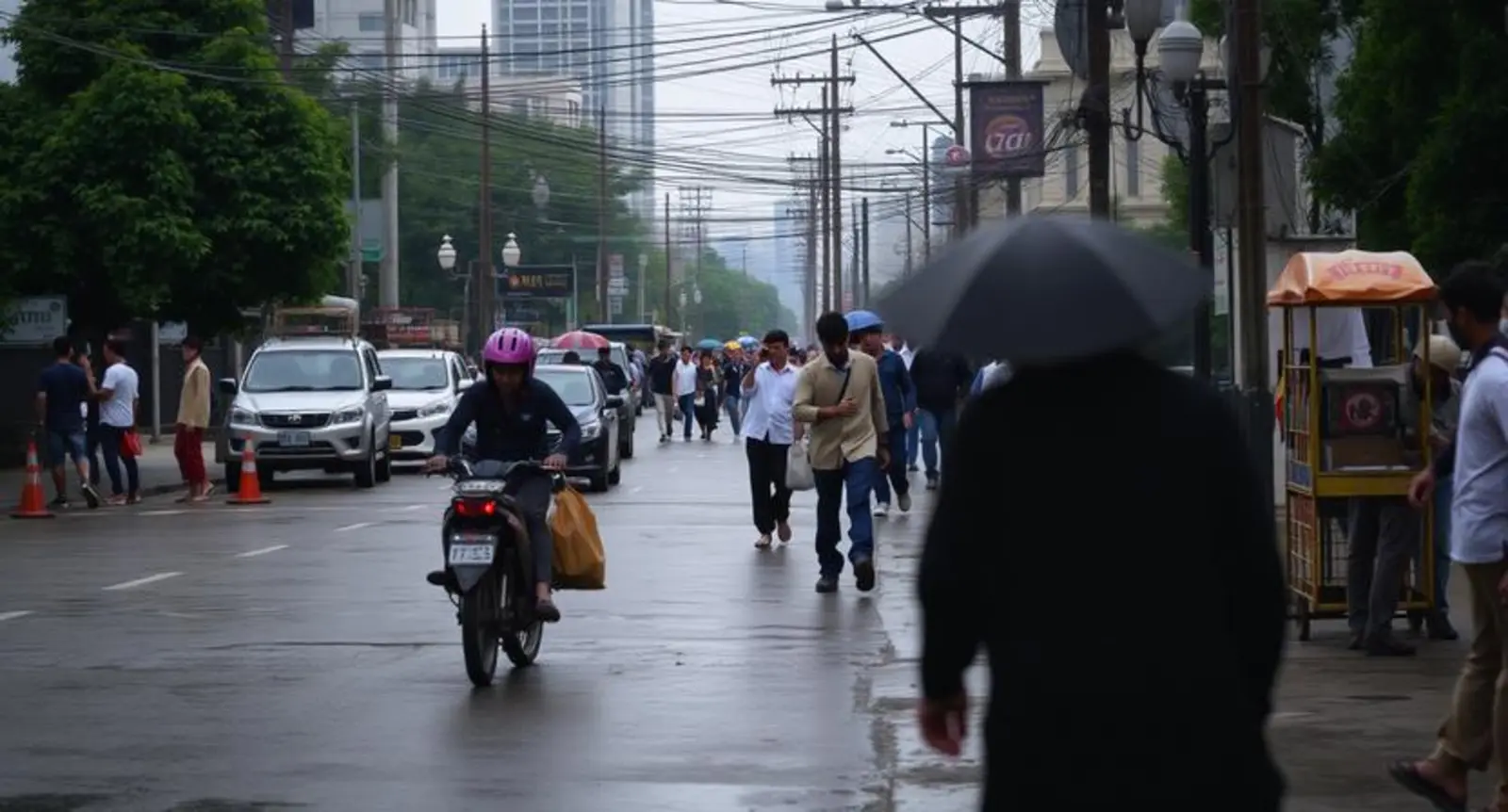
If you’re looking for synonyms for disturbance, the best alternative depends on what you mean by the word. Disturbance can describe a disruption, a commotion, a disturbance of peace, unrest, an interruption, or even an emotional or mental disturbance. These words overlap in meaning, but they are not always interchangeable.
This guide explains the most useful alternatives to disturbance, organized by meaning and context, so you can choose a word that sounds natural in everyday conversation, professional writing, academic work, news reporting, or creative expression.
Quick answer: The most common synonyms for disturbance include disruption, interruption, commotion, disturbance, disorder, unrest, turmoil, agitation, interference, upheaval, nuisance, and inconvenience. The best choice depends on whether you mean a temporary interruption, noisy activity, social disorder, emotional agitation, or a physical or environmental change.
What Does “Disturbance” Mean?
The noun disturbance generally refers to something that interrupts normal activity, causes disorder, creates noise or confusion, or disrupts a peaceful condition.
The word has several related meanings:
- An interruption — something that stops or interferes with an activity.
- A commotion — noisy, confused, or disorderly activity.
- Social unrest — public disorder, protests, or conflict.
- Emotional agitation — a state of worry, anxiety, or upset.
- A disruption of normal conditions — a change that affects an established system or process.
- A nuisance — something that bothers or inconveniences people.
Because disturbance has such a broad semantic range, selecting the right synonym requires attention to context, intensity, tone, and register.
The Synonym Hierarchy: Choosing the Right Word
A useful way to understand synonyms for disturbance is to place them on a conceptual scale:
Minor inconvenience → interruption → disruption → commotion → disorder → unrest → turmoil → upheaval
These words are related, but their intensity and implications differ.
For example:
- A nuisance is usually minor.
- An interruption temporarily stops something.
- A disruption interferes with normal operations.
- A commotion involves noisy or confused activity.
- Unrest often describes social or political tension.
- Turmoil suggests severe confusion or instability.
- Upheaval implies major and often lasting change.
This hierarchy is more useful than treating every synonym as an exact replacement.
Best Synonyms for Disturbance
1. Disruption
Meaning: An event or action that interrupts normal activity or prevents something from continuing smoothly.
Tone: Neutral to moderately negative
Formality: Neutral; common in professional and business contexts
Best used for: Work, technology, transportation, services, routines, and systems.
Common collocations:
- service disruption
- business disruption
- major disruption
- supply chain disruption
- operational disruption
Example:
The storm caused major disruptions to public transportation.
Disturbance vs. disruption:
Disturbance is broader, while disruption strongly emphasizes interference with normal operations.
2. Interruption
Meaning: Something that temporarily stops or breaks the continuity of an activity.
Tone: Neutral
Formality: Neutral
Best used for: Conversations, meetings, work, communication, and processes.
Common collocations:
- brief interruption
- unexpected interruption
- constant interruption
- service interruption
- interruption of service
Example:
We apologize for the interruption in service.
Disturbance vs. interruption:
An interruption specifically suggests that something has been stopped or broken. A disturbance may cause distraction or disorder without completely stopping an activity.
3. Commotion
Meaning: A state of noisy confusion, excitement, or disorder.
Tone: Vivid, often dramatic
Formality: Neutral to informal
Best used for: Crowds, public places, sudden events, and noisy situations.
Common collocations:
- cause a commotion
- sudden commotion
- loud commotion
- great commotion
Example:
A loud commotion outside the building attracted everyone’s attention.
Disturbance vs. commotion:
Commotion emphasizes noise, movement, and confusion. Disturbance is broader and can be quiet or non-physical.
4. Disorder
Meaning: A lack of order, organization, or control.
Tone: Negative
Formality: Neutral to formal
Best used for: Public situations, organizations, systems, and physical arrangements.
Common collocations:
- public disorder
- social disorder
- civil disorder
- widespread disorder
Example:
The authorities took steps to prevent further public disorder.
Disturbance vs. disorder:
A disturbance may be a single disruptive incident. Disorder often suggests a broader condition in which order or control has broken down.
5. Unrest
Meaning: A state of dissatisfaction, tension, or conflict, particularly within a society or political environment.
Tone: Serious
Formality: Formal and journalistic
Best used for: Political conflict, protests, social tension, and civil instability.
Common collocations:
- civil unrest
- political unrest
- social unrest
- widespread unrest
Example:
The country experienced months of political unrest.
Disturbance vs. unrest:
Unrest usually has a social or political dimension. It is not normally used for a noisy neighbor or a brief interruption.
6. Turmoil
Meaning: A state of great confusion, disorder, uncertainty, or emotional distress.
Tone: Strong and dramatic
Formality: Neutral to formal
Best used for: Politics, organizations, relationships, economies, and emotional states.
Common collocations:
- political turmoil
- economic turmoil
- emotional turmoil
- years of turmoil
Example:
The company went through a period of considerable turmoil.
Disturbance vs. turmoil:
Turmoil is generally more intense and prolonged. It suggests deep instability rather than a simple disturbance.
7. Agitation
Meaning: A state of emotional excitement, anxiety, or restlessness; it can also mean active campaigning for change.
Tone: Negative or context-dependent
Formality: Formal
Best used for: Emotional states, political campaigns, and social movements.
Common collocations:
- emotional agitation
- signs of agitation
- political agitation
Example:
The patient showed signs of increasing agitation.
Disturbance vs. agitation:
Agitation focuses more on emotional or psychological restlessness, while disturbance has a much wider range of meanings.
8. Interference
Meaning: An action that gets in the way of something or prevents it from working properly.
Tone: Negative
Formality: Neutral to formal
Best used for: Communication, technology, processes, and unwanted involvement.
Common collocations:
- outside interference
- radio interference
- political interference
- unnecessary interference
Example:
The signal was affected by electronic interference.
Disturbance vs. interference:
Interference emphasizes something getting in the way. Disturbance emphasizes a disruption to an existing state or activity.
9. Upheaval
Meaning: A major and often sudden change that disrupts an established system or situation.
Tone: Strong and dramatic
Formality: Formal
Best used for: Politics, society, economics, organizations, and major life changes.
Common collocations:
- political upheaval
- social upheaval
- economic upheaval
- period of upheaval
Example:
The industry experienced significant upheaval following the new regulations.
Disturbance vs. upheaval:
Upheaval is considerably stronger. It implies substantial change rather than a temporary disturbance.
10. Nuisance
Meaning: A person, thing, or situation that causes annoyance or inconvenience.
Tone: Mildly negative
Formality: Neutral
Best used for: Everyday annoyances, noise, neighbors, minor problems, and inconveniences.
Common collocations:
- public nuisance
- noisy nuisance
- constant nuisance
- become a nuisance
Example:
The construction noise became a nuisance for nearby residents.
Disturbance vs. nuisance:
A nuisance is something that annoys or inconveniences. A disturbance may be more serious and can involve disruption or disorder.
Synonyms for Different Types of Disturbance
The most effective way to choose a synonym is to identify what kind of disturbance you are describing.
| Meaning of Disturbance | Best Synonyms | Typical Context |
|---|---|---|
| Something that interrupts | Interruption, disruption | Work, service, conversation |
| Noisy activity | Commotion, uproar | Crowds, public places |
| Public disorder | Unrest, disorder | Politics, protests |
| Serious instability | Turmoil, upheaval | Society, economy |
| Emotional upset | Agitation, distress | Personal or psychological contexts |
| Annoyance | Nuisance, inconvenience | Everyday situations |
| Getting in the way | Interference | Technology, communication |
| General disorder | Confusion, chaos | Broad situations |
| Sudden noise | Ruckus, uproar | Informal conversation |
| Physical change | Disruption, alteration | Science and systems |
Informal Synonyms for Disturbance
In casual conversation, you may want something more vivid or conversational than disturbance.
Ruckus
A noisy disturbance or loud, disorderly activity.
The kids were making a ruckus in the backyard.
Uproar
A loud and often public expression of excitement, anger, or protest.
The announcement caused an uproar among employees.
Fuss
Unnecessary excitement, concern, or activity over something relatively minor.
Don’t make such a fuss over a small mistake.
Hubbub
A mixture of loud voices and general noise.
The hubbub of the crowded restaurant made conversation difficult.
Stir
Excitement or activity caused by an event.
Her unexpected decision caused quite a stir.
Quick distinction:
Use ruckus for noise, uproar for strong public reaction, fuss for unnecessary concern, hubbub for general noisy activity, and stir for excitement or attention.
Formal and Academic Alternatives to Disturbance
In professional or academic writing, the best word depends heavily on the subject.
Consider:
- disruption — when normal functioning is interrupted
- interference — when something obstructs a process
- instability — when a system lacks steadiness
- alteration — when a condition is changed
- perturbation — a technical term for a disturbance to a system
- displacement — when something is moved from its usual position
- deviation — when something moves away from an expected pattern
- fluctuation — when a value varies over time
For example:
The experiment examined the effects of environmental disturbance on the ecosystem.
Depending on the intended meaning, a more precise academic alternative might be:
The experiment examined the effects of environmental disruption on the ecosystem.
or:
The experiment examined the effects of environmental perturbation on the ecosystem.
The key lesson is that academic writing often benefits from precision rather than simply choosing a more complicated synonym.
Disturbance in Different Contexts
Disturbance of Peace
When referring to a situation that disrupts public tranquility or order, common expressions include:
- disturbance of the peace
- breach of the peace
- public disorder
- public disturbance
Example:
The police responded to a disturbance of the peace.
Here, public disturbance may be a general description, while breach of the peace is a more specific legal expression whose exact meaning depends on the jurisdiction.
Noise Disturbance
For unwanted or excessive noise, suitable alternatives include:
- noise nuisance
- excessive noise
- noise disruption
- loud disturbance
- unwanted noise
Example:
Residents complained about excessive noise from the construction site.
In this context, noise nuisance may be more natural than simply replacing disturbance with another general synonym.
Emotional Disturbance
When discussing a person’s emotional state, possible alternatives include:
- emotional distress
- agitation
- anxiety
- upset
- emotional turmoil
- inner conflict
These words are not exact synonyms.
For example:
She experienced emotional distress after the accident.
sounds different from:
She was visibly agitated during the interview.
The first emphasizes suffering or distress, while the second emphasizes restlessness or heightened emotional activity.
Disturbance vs. Disruption
These two words are among the closest alternatives, but they have different emphases.
| Feature | Disturbance | Disruption |
|---|---|---|
| Core idea | Something unsettles or interrupts normal conditions | Something interrupts normal functioning |
| Scope | Very broad | More focused on interruption |
| Common contexts | Noise, peace, emotions, social order | Services, business, technology |
| Example | A disturbance occurred outside | The outage caused a disruption |
Choose disturbance when the focus is on unusual activity, disorder, noise, or a loss of peace.
Choose disruption when the focus is on normal operations being interrupted.
Disturbance vs. Interruption
An interruption is usually temporary and directly breaks continuity.
A disturbance may distract, unsettle, or create disorder without completely stopping an activity.
Compare:
The meeting was interrupted by a phone call.
The phone call directly stopped the meeting.
The noise outside caused a disturbance during the meeting.
The noise distracted the participants but may not have stopped the meeting.
Best rule: If something breaks continuity, use interruption. If something creates disorder or distraction, disturbance may be better.
Disturbance vs. Commotion
A commotion is typically visible, noisy, and energetic.
There was a commotion near the entrance.
A disturbance is broader:
The police were called to investigate a disturbance.
The disturbance could involve noise, conflict, disorder, or another situation.
Choose commotion when you want the reader to imagine a noisy scene. Choose disturbance when you want a broader, more neutral description.
Disturbance vs. Unrest
Unrest is strongly associated with social, political, or public tension.
The region experienced widespread civil unrest.
It would sound unnatural to say:
There was civil disturbance in my bedroom.
For a personal or everyday situation, disturbance is usually more appropriate.
Use unrest for collective tension. Use disturbance for a broader range of disruptive events.
A Practical Decision Matrix
When choosing a synonym, ask four questions:
1. What is being affected?
- A service → disruption
- A conversation → interruption
- A peaceful environment → disturbance
- A crowd → commotion
- Society → unrest
- A stable system → upheaval
- A person’s emotions → agitation or distress
2. How intense is it?
- Mild → nuisance
- Moderate → disturbance
- Strong → turmoil
- Very significant → upheaval
3. What tone do you want?
- Neutral → disturbance
- Professional → disruption
- Formal → interference
- Journalistic → unrest
- Dramatic → turmoil
- Informal → ruckus
4. Is the problem temporary or ongoing?
- Temporary break → interruption
- Operational problem → disruption
- Ongoing instability → turmoil
- Major systemic change → upheaval
This four-question framework can help you select a synonym based on meaning first, rather than simply searching for a word that looks similar in a thesaurus.
Common Mistakes When Using Synonyms for Disturbance
Mistake 1: Treating every synonym as interchangeable
Words that share a dictionary definition can still differ in register and connotation.
For example, unrest, commotion, and upheaval all suggest disorder, but they operate in very different contexts.
Mistake 2: Using “turmoil” for minor problems
The printer caused turmoil in the office.
This sounds exaggerated unless the situation was genuinely chaotic.
For a minor technical problem, disruption or inconvenience is usually better.
Mistake 3: Using “unrest” for individual situations
Unrest generally describes collective or societal tension.
For an individual person’s emotional state, consider agitation, distress, or upset.
Mistake 4: Overusing formal vocabulary
Words such as perturbation may be technically correct but can make ordinary writing unnecessarily complicated.
The best synonym is not the most sophisticated word. It is the word that communicates the intended meaning most precisely.
How to Choose the Best Synonym for Disturbance
Use this simple formula:
Meaning + Context + Intensity + Audience = Best Word Choice
For everyday writing, disturbance, interruption, disruption, and nuisance are often the safest choices.
For business communication, disruption and interference are usually more precise.
For news and public affairs, unrest, disorder, and turmoil may be appropriate.
For creative writing, words such as commotion, uproar, ruckus, and hubbub can create a stronger visual impression.
For academic writing, select a technically accurate term such as perturbation, deviation, or disruption only when it precisely describes the phenomenon.
Antonyms of Disturbance
Depending on the intended meaning, antonyms of disturbance include:
- peace
- calm
- tranquility
- quiet
- order
- stability
- harmony
- continuity
- stillness
- serenity
- normality
For example:
The disturbance ended, and the room returned to calm.
The system regained stability after the disruption.
The neighborhood was peaceful after the noise stopped.
Notice that the best antonym depends on the specific meaning of disturbance.
Frequently Asked Questions
What is the best synonym for disturbance?
The best general synonym is disruption, but the ideal choice depends on context. Use interruption for something that temporarily stops an activity, commotion for noisy confusion, unrest for social tension, and turmoil for severe instability.
What is a synonym for disturbance in a peaceful environment?
Depending on the situation, you can use disruption, commotion, noise, nuisance, or public disturbance.
What is a synonym for a noisy disturbance?
Common alternatives include commotion, ruckus, uproar, hubbub, and fuss.
What is the opposite of disturbance?
Common antonyms include peace, calm, tranquility, order, stability, and harmony.
What is a formal synonym for disturbance?
Depending on context, formal alternatives include disruption, interference, disorder, instability, perturbation, and upheaval.
What is the difference between disturbance and disruption?
A disturbance is a broad term for something that unsettles, interrupts, or creates disorder. A disruption more specifically refers to an interruption of normal activity or functioning.
What is the difference between disturbance and commotion?
A commotion usually involves noisy, visible, or confused activity. A disturbance has a broader meaning and can refer to noise, disorder, interruption, emotional agitation, or social unrest.
Final Takeaway
The word disturbance is deceptively broad. Its best synonym depends on the exact situation you want to describe.
If something interrupts normal operations, choose disruption. If it breaks continuity, choose interruption. If it creates noise and confusion, choose commotion or ruckus. If it reflects social tension, choose unrest. If it describes severe instability, choose turmoil or upheaval. If it causes minor annoyance, choose nuisance.
The most effective vocabulary choice is therefore not about finding a word that is merely “similar” to disturbance. It is about identifying the precise semantic relationship between the original word and the situation you are describing.
That is the real key to strong synonym usage: choose the word that matches your meaning, audience, tone, and context—not simply the word that appears next to it in a thesaurus.

Turning everyday moments into catchy, relatable captions.